
Zamak Surface Finishing Capability Guide
Zamak finishes from economical plating to enamel, 18K gold and hand-set crystals: what each route delivers, what it costs, and what we confirm before quoting.
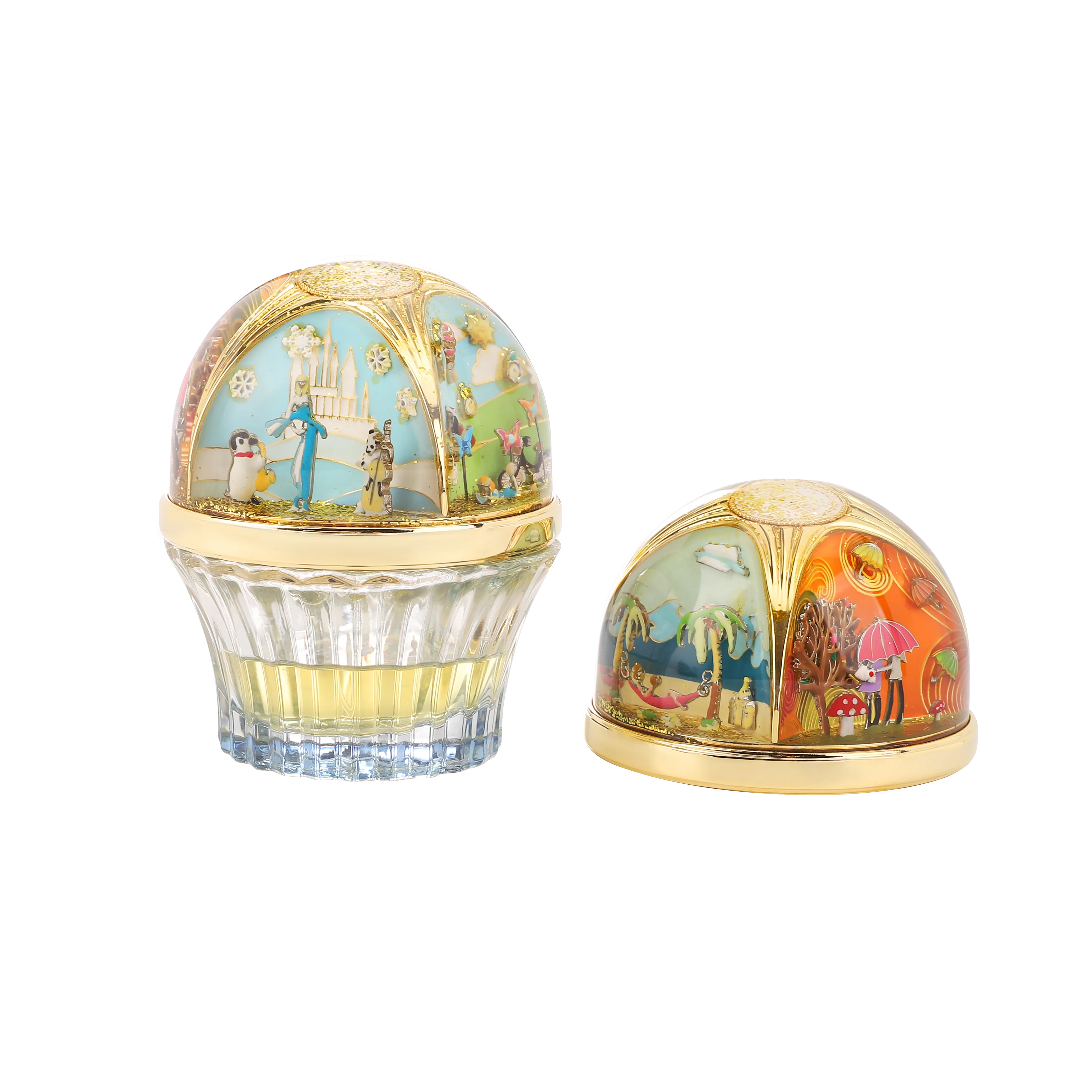
We operate across the full finishing spectrum: from efficient Zamak die-casting with durable surface treatment and cost-effective plating, through to precision casting combined with enamel, 18K gold plating and hand-set crystals. The finishing is never an afterthought — it exists to enhance your visual design, while holding up to real production and real wear.
Below is how each route is typically positioned on cost, what it delivers visually, and the specification points we confirm before quoting.
1. Two Routes, One Supply Chain
Volume route — engineered for cost and consistency
Efficient Zamak die-casting, controlled surface treatment and economical plating. This is the route for programmes where unit cost, repeatability and lead time drive the decision, and where the finish needs to survive normal consumer use.
Premium route — engineered for perceived value
Precision Zamak die-casting with post-processes such as enamel work, 18K gold plating and hand-set crystals. This route is for pieces where the finish is the product — luxury caps, collector packaging, gift items where surface depth and hand craft carry the brand message.
2. Process Map
Cost positioning is expressed on a three-tier scale — Economy, Standard, Premium — relative to one another for the same part and quantity. Absolute figures depend on part size, decoration area, thickness and order volume, and are confirmed per project.
| Process | Visual effect | Where it is used | Cost positioning | Key point to confirm |
|---|---|---|---|---|
| Zamak die-casting | Sharp detail, complex geometry, thin walls | Every metal case, cap and ornament — the base for all finishes below | Standard | Tooling, wall thickness, draft |
| Electroplating — gold, silver, chrome, black nickel | Mirror or satin metal tone, uniform across the part | Caps, shells, ornaments where a clean metal look is required | Economy to Standard | Plating thickness (μm), colour tone, abrasion requirement |
| Spray coating / lacquer | Solid colour, matte or gloss, soft-touch options | Colour programmes, brand palettes, protective layer over plating | Economy | Pantone reference, gloss level, film thickness |
| UV printing | Multi-colour graphics, fine text, sharp edges | Logos and graphic patterns on flat or gently curved surfaces | Standard — higher, three processes | Base coat + print + top coat; colour count |
| Heat transfer / dye-sublimation | Full-colour, photographic detail, smooth gradients | Illustrated lids, patterned surfaces, image-led designs | Standard — two processes | Film setup charge, substrate coating, colour matching |
| Enamel — soft or hard | Depth and colour saturation, jewellery-like surface | Luxury emblems, monograms, ornamental panels | Premium | Soft (recessed, tactile) vs hard (polished flat), colour count |
| 18K gold plating / gold-clad | Warm true-gold tone, high perceived value | Prestige caps and gift items | Premium | Karat, thickness in μm, whether true-gold deposit is required |
| Hand-set crystals | Sparkle, dimension, hand-crafted irregularity | Ornamental caps, collector editions, statement pieces | Premium | Crystal brand, size, quantity, setting method |
| Anodising (aluminium parts) | Colour-fast matte metallic, integral to the metal | Aluminium lids and shells used alongside Zamak bodies | Standard | Film thickness, clear vs dyed, colour variation tolerance |
Enamel in Detail
Enamel is the finish buyers choose when the surface itself has to carry the design. Unlike plating, which coats the metal in a uniform tone, enamel fills the recessed fields of a cast design with colour. The metal lines stay visible as the frame, and the colour sits inside them with a depth and saturation that a coating cannot reach. That is why it reads as jewellery rather than packaging, and why it sits on the premium route: it is used where the finish is the product — luxury emblems, monograms, ornamental panels.
There are two ways to finish it, and the choice changes both the look and the feel. Soft enamel is recessed: the colour sits below the surface of the metal, so you can feel the raised metal lines when you run a finger across the piece. It is tactile, and it suits designs where the metalwork itself is part of the story. Hard enamel is polished flat: the surface is ground and polished level, so the colour and the metal sit in one smooth plane, closer to a stone or a piece of jewellery. The same design can read as two different products depending on which one you choose, so the decision is made with the artwork in front of us, not from a price list.
Colour is where the hand work lives. Every colour in the design is a separate field, filled by hand. Add a colour and you add a pass of hand work, a pass of inspection, and time on the schedule — cost and lead time move with the number of colour fields, not with the size of the piece. Colour matching starts from your Pantone codes, or from a physical swatch when the shade has to be exact. If the design carries many colours, it is worth deciding early which ones are essential, because each one is a real step in production.
Enamel is most often paired with 18K gold plating. The gold frame carries the enamel fields, and the two finishes do different jobs: the gold gives the warm true-gold tone and the perceived value, the enamel gives the colour depth. That combination is the Prestige route — enamel and 18K gold on the water-globe dome cap — with hand-set crystals added on pieces where the design calls for sparkle. The same logic applies to the other premium finishes: enamel, gold and crystals are combined on one piece only when each one earns its place, because every added process is a step that has to be inspected and a yield loss that has to be quoted in.
Enamel is not the right choice for every programme. When unit cost and repeatability drive the decision, and the design does not need colour depth, economical plating or spray coating does the job well — that is what the volume route is for. Enamel earns its place when the piece has to be kept, collected or gifted, and the surface is what the buyer remembers. If you are deciding between the two routes, send the artwork with the colour fields marked and tell us whether the surface should be polished flat: those two answers, with your Pantone codes or a swatch, are enough for us to confirm whether enamel fits and what it will take.
3. Cost Drivers, Stated Plainly
Four things move the price of a finish more than anything else. Raising any one of them changes both the quotation and the wear life.
- Number of processes. A single-step coating is one pass. UV printing is three — base coat, print, top coat — and each pass adds labour, yield loss and inspection.
- Layer thickness. Plating and lacquer thickness is the main lever on abrasion life. Thicker costs more per piece, but postpones the point at which the base metal shows through under repeated friction.
- Hand work. Enamel filling and crystal setting are manual. Cost scales with the number of colour fields and stones, and the lead time moves with them.
- Yield. Multi-process decoration carries a higher reject rate than a single finish. That loss is quoted in, not absorbed silently.
4. What We Confirm Before Quoting
These five answers turn an estimate into a firm quotation. We would rather ask once than revise three times.
- Colour reference — Pantone codes, and whether a physical swatch is available for matching.
- Plating or gold specification — karat and thickness in μm; whether imitation or true-gold deposit is required.
- Crystal specification — brand, size, quantity and setting method; crystal versus diamond must be stated explicitly.
- Enamel type — soft or hard; how many colour fields; whether the surface is to be polished flat.
- Wear expectation — how many cycles or years the finish is expected to survive, which sets the thickness we engineer to.
5. Working With Us
We are a metal packaging solution provider and OEM/ODM manufacturer. Send us your artwork, drawings or a physical reference, and we will assess how each finish can be realised on your part — then quote against the specification above.
All development work is handled under NDA with clearly defined confidentiality terms, and every project is traceable through our production chain.